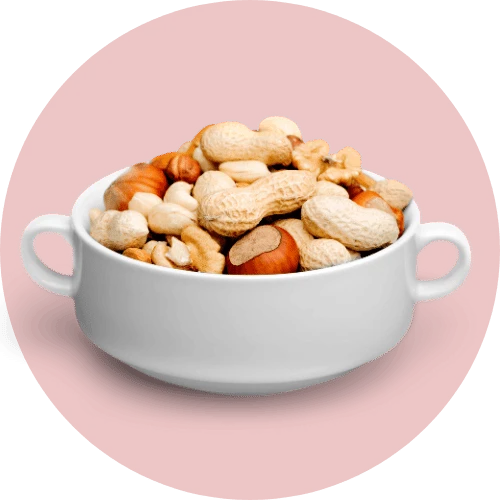

Direct answer: The best dry fruits for hair growth are almonds, walnuts, pumpkin seeds, flaxseeds and raisins — foods rich in biotin, zinc, iron, vitamin E and omega-3 fats, the nutrients hair needs to grow strong. A small handful of mixed nuts and seeds a day, eaten consistently for months, supports healthier hair far better than any single expensive product. Hair grows from the inside out, and no food works overnight.
Hair is mostly protein, and it grows from follicles that need a steady supply of nutrients: protein to build the hair shaft, iron to carry oxygen to the follicles, zinc to support growth and repair, biotin and other B vitamins for keratin production, and healthy fats to keep the scalp nourished. When any of these run low, hair becomes weak, thin, dull — or starts falling out more than usual.
In Pakistan, hair fall is one of the most common complaints, and the causes are often a mix of poor diet, stress, heat, hard water, and harsh hair products. No food can fix all of that, but a diet rich in nuts and seeds removes the nutritional part of the problem. Dry fruits are one of the easiest ways to do that: they are nutrient-dense, easy to eat daily, and need no cooking.
The key word is consistency. Hair grows slowly — about a centimetre a month — so it takes two to three months of regular eating before you can fairly judge whether a food is helping. A handful of nuts once a week will not do it. A small daily portion will.
Almonds are the classic hair food in Pakistan, and for good reason: they are rich in vitamin E, biotin, magnesium and protein. Vitamin E protects the scalp from oxidative stress, and biotin supports keratin, the protein hair is made of. Soaked almonds are the traditional morning choice — soak five to eight overnight, peel them in the morning, and eat them with breakfast. The full method is in our guide on how to soak almonds overnight. For help choosing good almonds, see our complete buying guide for almonds in Pakistan.
Walnuts are the only common tree nut rich in plant omega-3 fats, which nourish the scalp and keep hair from becoming dry and brittle. They are also a good source of biotin, vitamin E and selenium. A few walnut halves a day — raw or soaked — is enough. Our guide to choosing premium walnuts in Pakistan explains how to pick fresh ones.
Pumpkin seeds are one of the richest food sources of zinc, a mineral directly linked to hair growth — zinc deficiency is a known cause of hair shedding. They are also rich in iron, magnesium and protein, and they are cheap. A tablespoon or two of shelled pumpkin seeds a day is an easy addition to breakfast or a salad. Our guide to choosing pumpkin seeds in Pakistan covers what to look for.
Flaxseeds are the richest plant source of omega-3 fats, and they add fibre and lignans as well. Ground flaxseed mixed into porridge, yoghurt or roti dough is the easiest way to eat them daily. Buy whole seeds and grind a small batch fresh each week — ground flaxseed goes rancid quickly.
Iron deficiency is one of the most common causes of hair fall in Pakistan, especially among women. Raisins and dates are practical, everyday sources of iron — a small spoonful of raisins or one or two dates a day helps, especially when eaten with vitamin C, which improves iron absorption. Our comparison of the best dates in Pakistan explains which varieties are softest and easiest to eat daily.
You do not need a complicated plan. A small daily mix is enough:
Morning: five to eight soaked almonds and two to three soaked walnut halves with breakfast, plus a tablespoon of ground flaxseed in porridge or yoghurt.
Midday or evening: a tablespoon of pumpkin seeds, a small spoonful of raisins, and one or two dates as a snack.
That is a small handful in total — about 150 to 200 calories — and it covers vitamin E, biotin, zinc, iron, omega-3 and protein in one routine. Keep the portions small: nuts and seeds are energy-dense, and eating a whole bowl at once adds far more calories than your hair needs.
It is important to be honest about limits. Dry fruits support hair growth, but they cannot fix hair fall caused by a medical condition, a hormone problem, a severe deficiency, or a scalp disease. If your hair is falling out in patches, or falling out heavily for months, see a doctor — a blood test for iron, vitamin D and thyroid can find causes that food alone will not solve.
They also cannot undo damage from harsh products, excessive heat styling, or tight hairstyles that pull on the roots. Food works from the inside; the outside still needs gentle care. The same honesty applies to other health claims — our guide on dry fruits for heart health explains what the science actually supports.
Food works best alongside a few simple habits. Wash your hair with a gentle shampoo and lukewarm water — very hot water dries the scalp. Oil the scalp lightly once or twice a week if that suits your hair type. Avoid tight ponytails and heavy heat styling. Get enough sleep and manage stress, both of which affect hair growth. And drink enough water: dehydration makes hair dry and brittle, just as it makes skin dull — the same nutrients that help hair also help skin, as covered in our guide on dry fruits for skin glow.
Hair food only works if the nuts and seeds are fresh. Stale, rancid nuts lose their nutrients and taste bitter. Buy from sellers who pack in sealed bags, store in airtight jars at home, and keep quantities small enough to finish within a few weeks. Our guide on how to tell if dry fruits are fresh or stale covers the checks, and our guide to the best dry fruits to buy online in Pakistan covers safe buying.
No single dry fruit does it all. Almonds give vitamin E and biotin, walnuts give omega-3 fats, pumpkin seeds give zinc, and raisins and dates give iron. A small daily mix of several is better than a large amount of one.
At least two to three months of regular daily eating. Hair grows about a centimetre a month, so new, stronger hair takes time to appear. Consistency matters more than quantity.
Soaked almonds are easier to digest and the skin peels off easily, which many people prefer. Nutritionally, raw and soaked almonds are very similar — the important thing is eating them regularly, not the exact form.
They can help when hair fall is caused by poor nutrition, especially low iron, zinc or protein. They cannot stop hair fall caused by a medical condition, hormone problem or scalp disease — if hair fall is heavy or patchy, see a doctor.
A small handful in total — for example five to eight almonds, two to three walnut halves, a tablespoon of pumpkin seeds and a spoonful of raisins. That covers the key nutrients without adding too many calories.
Pumpkin seeds are one of the richest food sources of zinc, a mineral directly linked to hair growth, and they also provide iron and protein. They are a genuinely useful addition to a hair-healthy diet, not a myth — but they work as part of an overall diet, not on their own.


All the power of niche in your pocket. Schedule, publish and monitir your accounts with ease.